Goddesses, or female representations of the divine, can be found in religious traditions the world over. They hold places of importance in Hinduism, Buddhism, paganism and the ancient cultures of Greece, Egypt, Mesopotamia, the Americas and more. In their
ancient stories, these goddesses embody a mixture of warriors, mothers, magicians and lovers.
Every goddess has her own unique qualities, talents and associated rituals. Over the centuries -- and
to this day -- people have
conducted rituals to specific goddesses when they want to generate certain results in their lives. Having trouble in relationships? Try calling on
Aphrodite, the Greek goddess of love. Is money your concern? Consider making an offering to
Lakshmi, the Hindu goddess of wealth.
There are
dozens of different goddesses from cultures around the world, but here are 11 powerful deities to consider invoking in your life:
Dorling Kindersley via Getty Images
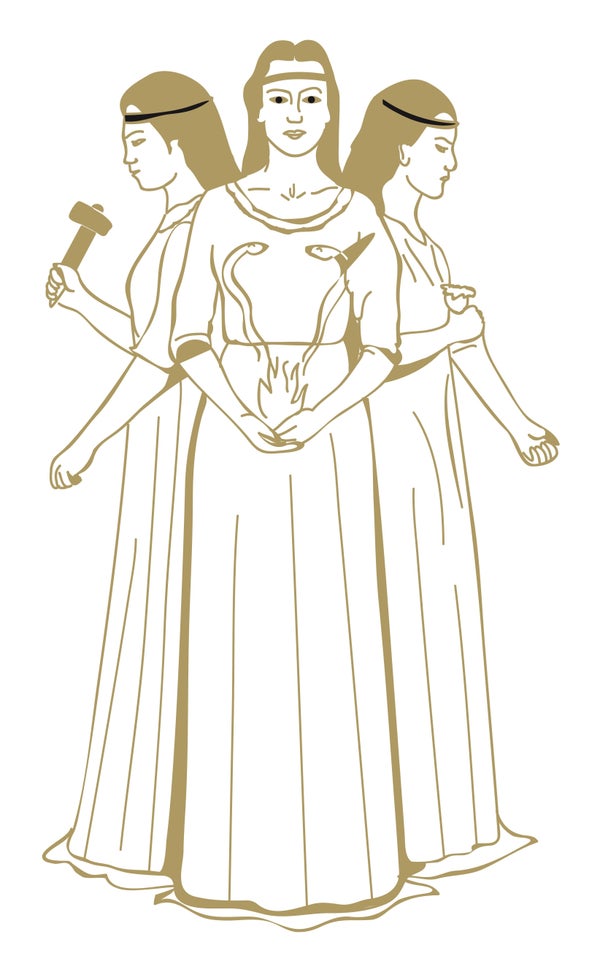
Brigid is a
Celtic goddess revered for her many talents. She is considered a protector of livestock and the young, and she is a patroness of poetry,
metalsmithing, healing and spring. She is celebrated on the pagan holiday of
Imbolc, which falls on February 2 in the Northern Hemisphere. There are many wells named after Brigid throughout Ireland where people
leave offerings of coins for healing.
Kelli Klymenko via Getty Images
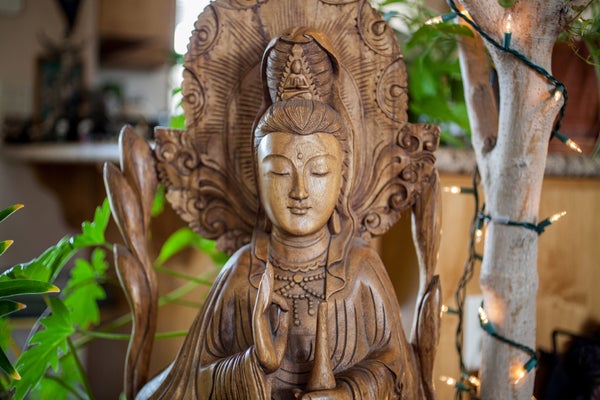
Kuan Yin is a
Buddhist deity who embodies compassion. Her name translates to "perceiving the sounds (or cries) of the world." She is a goddess of mercy, dedicated to relieving the suffering in the world.
Offerings are made to Kuan Yin in the form of sweet cakes, lotus incense, fresh fruit or flowers, particularly when one hopes to invoke her blessing or conceive children.
Isis - Egyptian
Zadvinskii via Getty Images
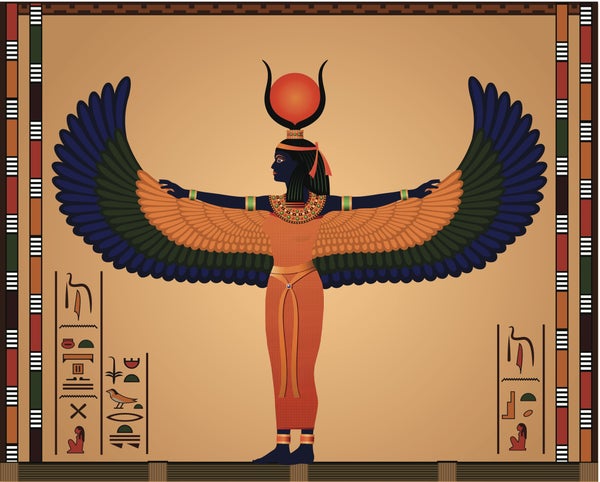
Isis is one of the most powerful deities in the
Egyptian pantheon. Her name means "throne" and she is often depicted with the hieroglyphic sign of the throne or a solar disk and cow’s horns on her head. Her magical abilities are believed to be so great they could heal the sick and bring back the dead. In her role as mother of the god Horus, Isis is viewed as a powerful protector and a role model for mothers.
Shakti - Hinduism
Arjunkrishna90/Wikipedia
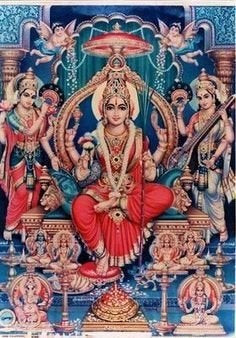
In Hinduism,
Shakti is the underlying divine power in the universe -- the source from which all existence springs. As such she is akin to the "Mother Earth" of other traditions but is sometimes viewed more as an
energetic force than as a divine female being. In Hindu tradition, women are thought to be vessels of shakti and thus possess powers of creation and destruction. Shakti worship is a key element of
Tantra Yoga, a form of meditation practice that developed in the 5th century CE.
Aloysius Patrimonio via Getty Images
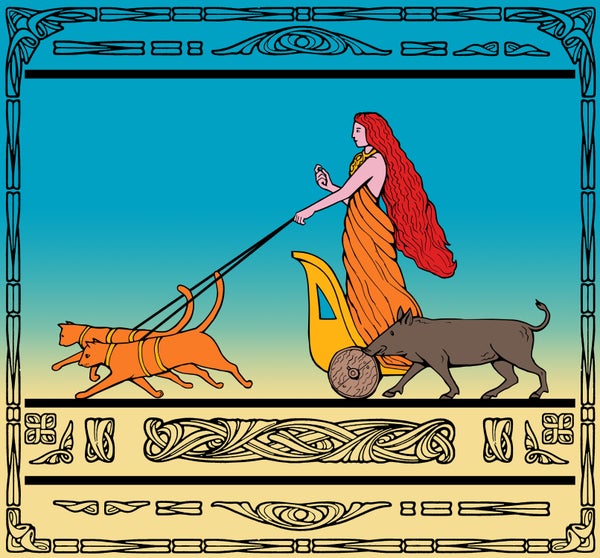
Freya is the powerful
Norse goddess of love and fertility. She is a practitioner of magic with an aptitude for manipulating reality to suit her desires. She is also associated with the dead, as she presides over Folkvang, the afterlife realm, whose inhabitants she selects from among slain warriors. In this capacity she is believed to help guide the recently deceased to the afterlife. Those wishing to invoke her help doing magic or attracting love leave
offerings of mead, honey, meat and more.
Bast - Egyptian
falcon0125 via Getty Images
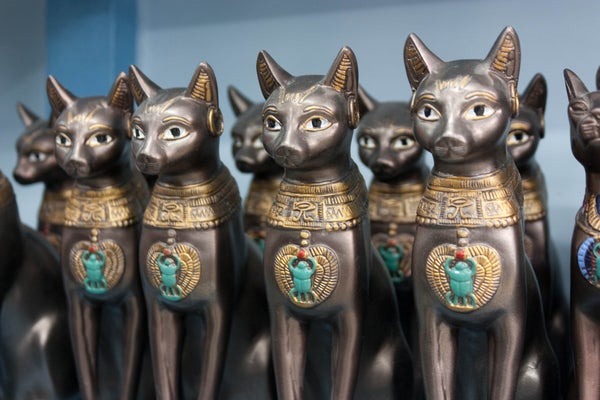
Bast, or Bastet, is the
Egyptian goddess of warfare, depicted in the form of a cat. She is a fierce protector said to possess the Utchat, the all-seeing eye of Horus. She has also been associated with fertility, music and physical pleasure. Bast is
associated with perfume, as well, as the hieroglyph for her name is the same as that of the bas jar, used to hold expensive perfumes. For that reason people occasionally leave her offerings of perfumes and scented oils.
Athena - Greek
EURASIA PRESS via Getty Images
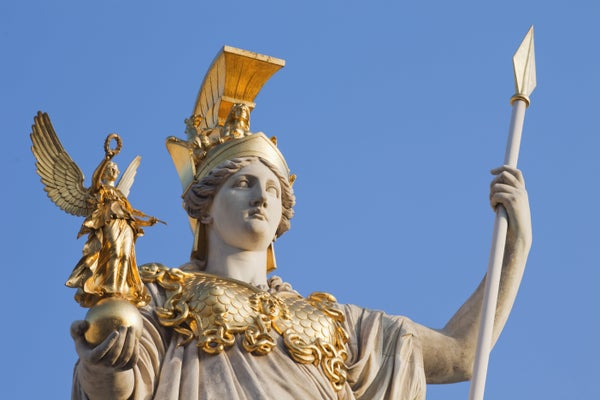
Athena is the
Greek goddess of wisdom and a friend to warriors. A virgin goddess, Athena is poised and courageous but also a lover of
arts and literature. She is often represented as an owl, or with an owl at her side, and is associated with the olive tree. As the
patron deity of Athens, Greece, Athena is often called upon for protection and to help in matters of war and governance.
Pachamama - Andean
Bob Wickham via Getty Images
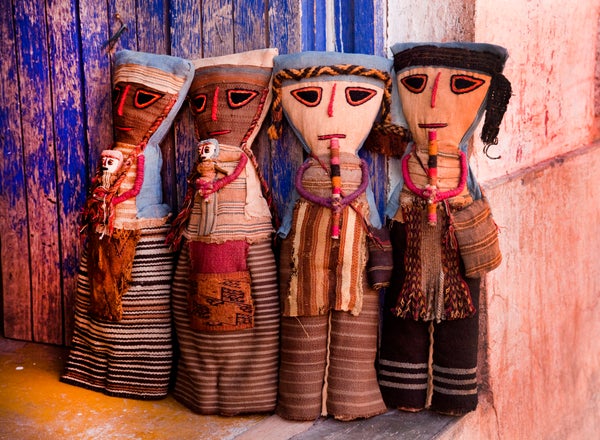
Pachamama is the
Mother Earth goddess of the Andean people. She embodies nourishment and abundance and encompasses all of creation, similar to the Greek goddess, Gaia. She is associated with rituals for fertility, protection and healthy crops. Those who venerate her typically leave
offerings of food, tobacco, alcohol and coca leaves.
Mazu - Buddhist
Peter Cook via Getty Images
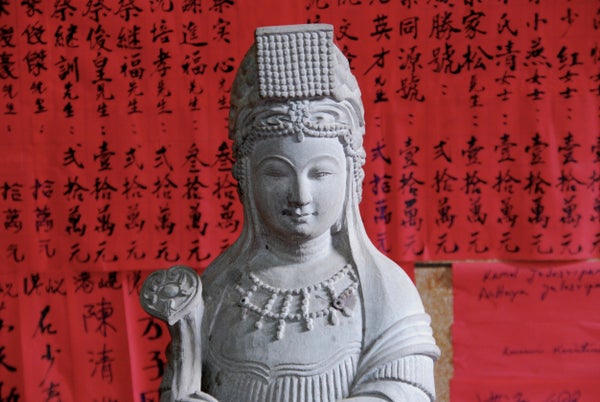
Mazu is a
Chinese Buddhist goddess of the sea. She is venerated as the patron of sailors and seafarers and is said to come to the aid of those who call for her. Mazu is believed to be the deified form of a young woman named
Lin Mo Niang, who lived during the 10th century AD. Lin Mo was known as a healer who cured the sick and had the power to predict the weather and even quell storms at sea.
Gruenemann/Flickr
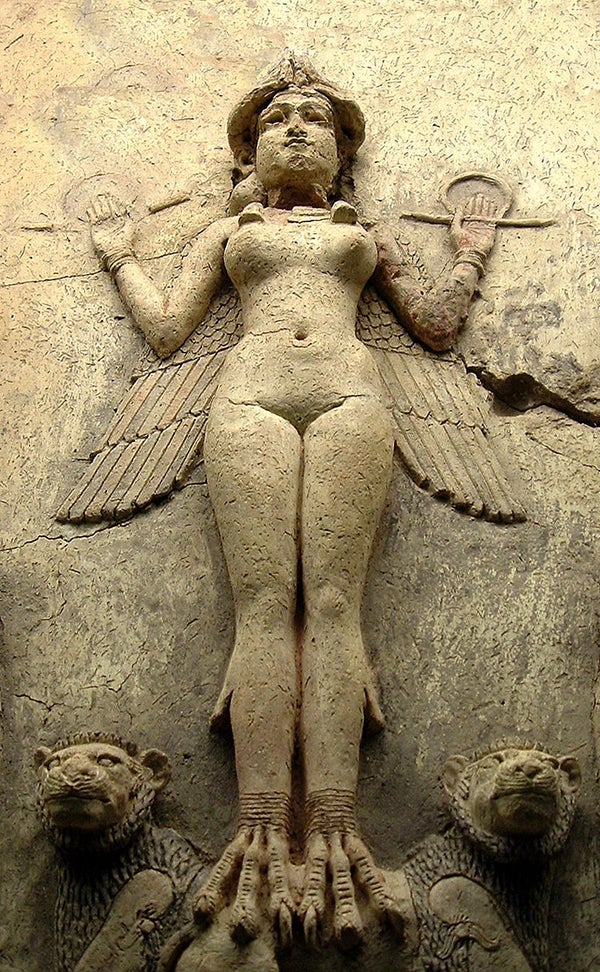
Inanna is the
Sumerian goddess of sexual love and procreation, called the Queen of Heaven. She is often associated with the Mesopotamian goddess, Ishtar, and the Phoenician Astarte. She is also thought to be skilled in
war and politics and is often depicted with lions to represent her courage and prowess. Offerings to Inanna are made in the form of
special cakes,
wine, grains and
meat.
Wikipedia
Eos is the
Greek goddess of the dawn, a patron of new beginnings. She is the sister of Helios, the sun god, and Selene, the moon goddess. She is frequently depicted with wings and is said to dispense the morning dew on the earth. Eos is also believed to have an
insatiable lust -- both for love and adventure.


